



Wondering if your site speed impacts your sales? Absolutely. Slow websites lose visitors and revenue, while faster sites boost sales. This article dives into the direct impact of website speed on sales and provides practical tips to improve your website’s performance.
Understanding a website speed’s impact on sales is crucial for any business aiming to increase revenue and improve user experience. We’ll also explore how page speed conversions influence buying behaviour, especially on WordPress sites, and why WordPress conversion optimization matters for long-term growth.
Key Takeaways
- Website loading speed directly impacts your conversion rate, with a 0.3% sales decrease for each additional second of loading time. This highlights the connection between page speed conversions and overall revenue performance.
- Improving site speed enhances user engagement, reduces bounce rates, and leads to higher customer satisfaction and repeat business. These improvements directly contribute to stronger website performance revenue outcomes.
- Key metrics like Core Web Vitals and Page Load Time are essential for evaluating website performance and can guide improvements to boost sales. They also play a major role in WordPress conversion optimization strategies.
The Direct Impact of Page Speed on Sales
The efficiency and delivery of content on a website, which are crucial for user experience, hinge significantly upon the site’s performance capabilities. The speed at which pages load is an indispensable aspect of this experience. Users who encounter slow-loading websites often opt to visit competing sites instead, potentially causing immediate sales losses. Research by Portent indicates that with each extra second it takes for a page to load, e-commerce conversion rates suffer by 0.3%, underlining the importance of optimal loading performance including swift site and page loading speeds.
Enhanced website responsiveness can lead not only to increased customer inquiries but also heightened satisfaction and ultimately more purchases. Data reveals that conversion rates may triple when there’s an improvement in loading time from five seconds down to just one second—a stark testament to the strong connection between quick loading times and elevated conversion numbers. Businesses stand to gain significant upticks in both conversion rate and total revenue by investing efforts into speeding up their websites’ load times.
Prolonged loading durations have been known to repel customers from revisiting a website thereby impacting sustained patronage negatively as well as harming ongoing business relationships—slow websites breed dissatisfaction among users leading them away thus damaging brand perception over time. Because first impressions matter immensely online, ensuring your e-commerce platform operates rapidly remains essential not only for attracting new clientele, but also for securing additional income streams.
How Load Speed Affects User Behavior
When a mobile webpage’s load time increases from one second to three seconds, the likelihood of users bouncing from the site rises by 32%. Slow loading times can result in decreased user engagement and significant revenue losses as customers are driven away by subpar website performance, culminating in an unsatisfactory experience for them. On the other hand, websites that offer quick page loads are often seen as more credible and reliable by users, which bolsters their engagement with the site along with longer visit durations and lower rates at which they leave.
Enhancing site speed is critical for retaining visitors’ attention. It encourages prolonged interaction with content—this holds particular weight for eCommerce platforms where engagement levels directly affect your conversion rate. Adoption of solutions like Accelerated Mobile Pages (AMP) has been known to slash mobile loading periods dramatically—up to an astounding 85%, enabling quicker access for consumers and fostering greater retention.
In essence, having a swift and nimble website results in elevated satisfaction among users. Websites that boast speedy load times not only keep visitors on-site, but also have better chances at transforming them into dedicated patrons. In today’s bustling digital commerce scene, funneling resources towards optimizing your website’s speed equates to investing in both client happiness and your enterprise’s prosperous future.
Key Metrics to Measure Website Speed
Grasping the efficacy of your website hinges on tracking crucial site speed metrics that mirror its loading efficiency. Aspects such as load time, response times from servers, and overall user experience are imperative in assessing web performance and its influence on revenue generation. Employing appropriate tools and measures to enhance speed can foster greater user involvement, boost conversion rates, and augment the site’s operational effectiveness.
Central among these gauges are Core Web Vitals along with Page Load Time — primary indicators of web page performance. Core Web Vitals concentrate on facets related to user interaction such as loading velocity, responsiveness, and visual constancy. Conversely, Page Load Time captures the comprehensive rapidity at which pages become accessible for users. Diligently refining these elements by keeping track of load time data holds promise for markedly elevating both your site’s functionality and customer contentment.
Core Web Vitals
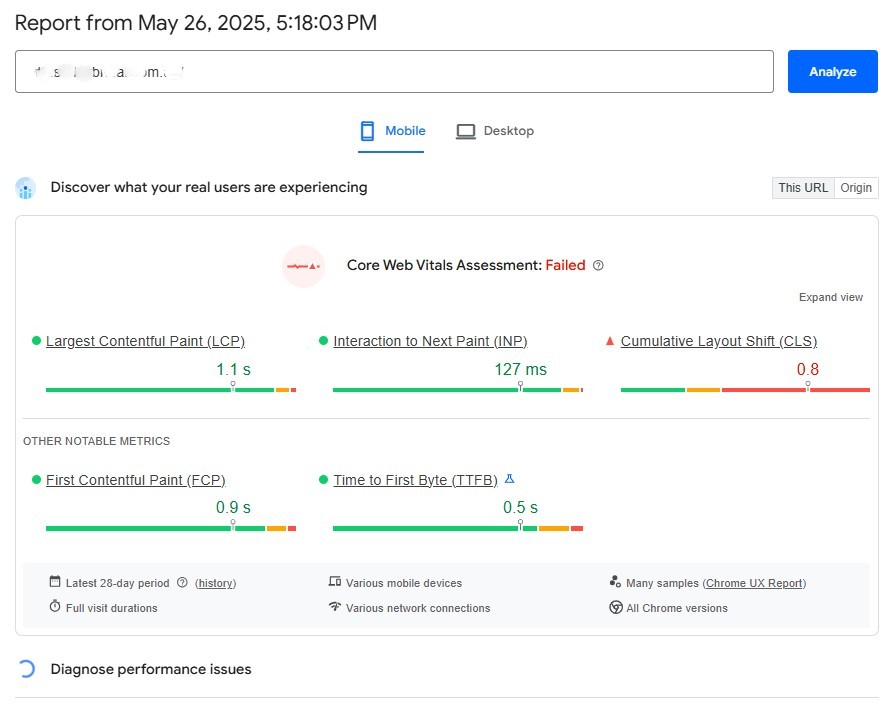
Core Web Vitals play a crucial role in assessing the user experience by providing metrics that gauge loading speed, interactivity, and visual stability. They are pivotal for determining the efficacy of a website. Specifically, Largest Contentful Paint (LCP) is utilized to measure how long it takes for the most significant above-the-fold element on a page to load completely. Achieving an optimal LCP can potentially lead to an impressive increase of up to 61.13% in conversion rate.
Cumulative Layout Shift (CLS) is used as a metric to quantify the degree of visual stability during the webpage’s loading process, tracking any layout shifts that might occur. Tools such as Google PageSpeed Insights offer comprehensive evaluations of Core Web Vitals for websites—clarifying performance metrics and providing useful recommendations aimed at improving overall page speed.
Page Load Time
Web pages that load in under three seconds can lead to better user engagement, as visitors are more likely to explore more content. The average web page size is 2,486KB, which directly affects both the page’s load time and how satisfied users are with their experience. Struggling for an impeccable score in page speed is beneficial in refining key performance indicators, but should not be regarded as the exclusive priority.
Font subsetting is a technique that reduces the size of font files, making web pages load faster. Some resources, known as render-blocking resources, need to be fully downloaded and processed by the browser before any part of a webpage can be displayed. These resources can slow down page load speeds.
Techniques to Improve Website Speed
To enhance your site speed, employing a mix of strategies is crucial. Below are some efficient tactics.
- Edge Side Tagging: Utilizing this method can reduce the size of data transferred and speed up page load times by shifting tag processing workload.
- NitroPack: A plugin for WordPress websites thats designed for optimizing web performance by employing various approaches to boost page speed.
- AI and Machine Learning Technologies: Optimizing engines powered by these advanced technologies effectively improve overall page performance.
By putting these methods into practice, you’ll be able to markedly accelerate the site speed.
Prioritizing key resources through preloading improves page speeds by ensuring they’re loaded earlier in the process. Positioning JavaScript towards the end or opting to defer it can also substantially contribute to faster site speeds. Managing an optimal number of plugins is essential for sustaining good web performance and avoiding sluggish loading durations.
Image Optimization
Reducing the size of images through compression enhances performance by shortening loading times while preserving image quality. It is crucial for enterprises to align the dimensions and format of images with the demands of their websites in order to boost page speed. Employing advanced image formats like WebP and AVIF is advocated for optimal image optimization, as resizing images and compressing data can significantly cut down on load times.
To elevate page speed, it’s beneficial for images to be configured to lazy-load so that they only begin loading when they are about to enter a user’s viewport. By adopting these tactics for optimizing imagery, businesses can substantially enhance both load times and the overall user experience.
Minification and Compression
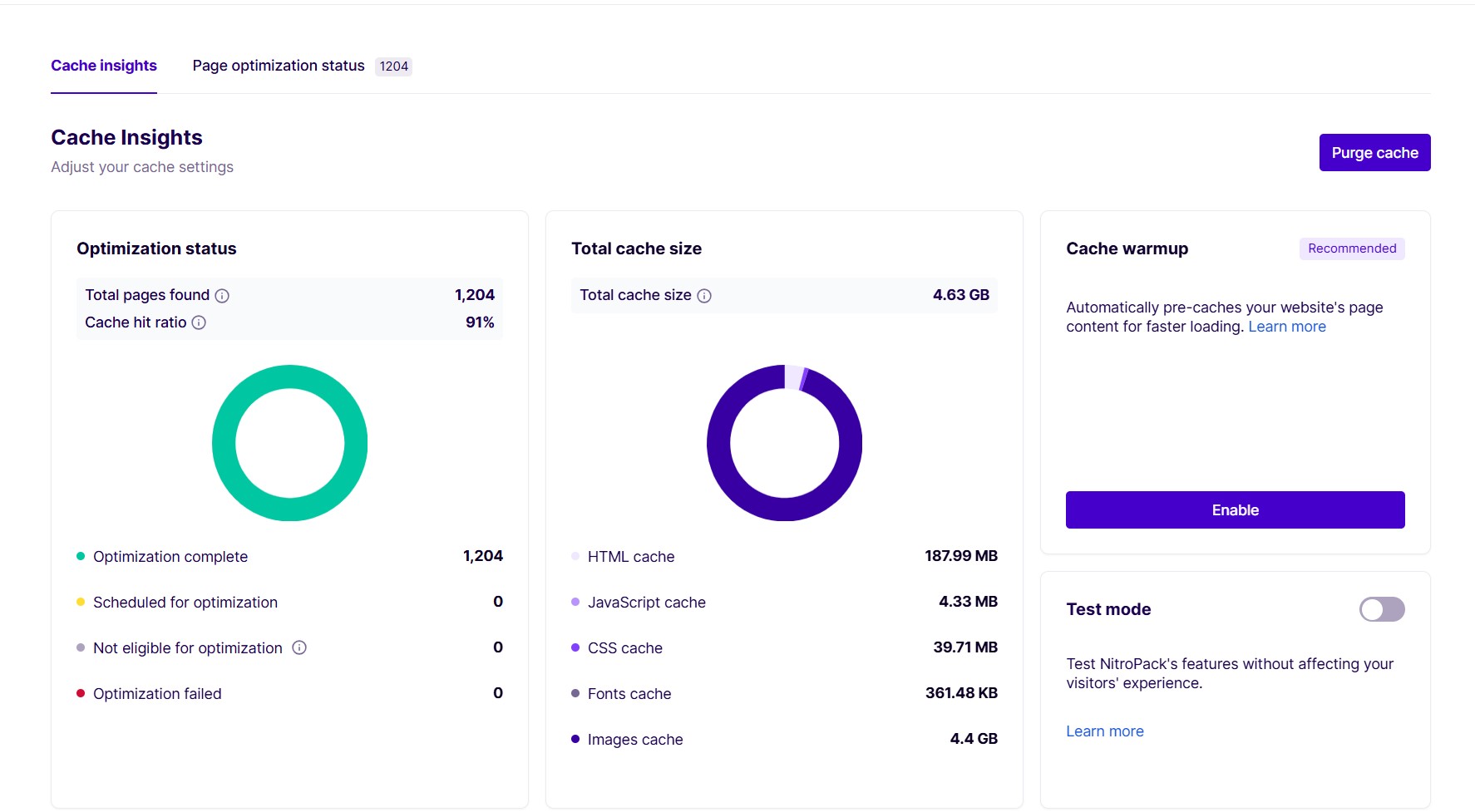
Minification aims to remove redundancies such as code comments, white space, and unused code to streamline the loading process. Minification reduces the size of HTML, CSS, and JavaScript files by removing unnecessary characters.
Minifying code results in faster loading times by decreasing the data transferred from server to browser.
Caching Strategies
By utilizing browser caching, static files can be stored temporarily on a user’s device to expedite their loading. This method enhances website performance as it retains commonly accessed data, which diminishes load times by lowering the amount of server requests and thus hastens response times due to reduced server loads.
Adopting robust caching tactics not only elevates performance, but also augments user contentment and bolsters conversion rates.
Mobile Optimization for Better Sales
More than 53% of web traffic and 65% of online sales come from mobile devices. For travel consumers, a 0.1 increase in mobile site speed factors can lead to a 10.1% rise in conversion rates. A slow site user experience can reduce the likelihood of customers making future purchases. Additionally, speed impacts can significantly affect overall site performance.
High-resolution image settings can delay loading times and input delays frustrate users. Tools like PhotonIQ can help optimize eCommerce sites for speed gains, enhancing user experience.
Responsive Design
Approximately 90% of websites adopt responsive design to cater content effectively across various screen sizes, which is essential for an optimal viewing experience on mobile devices. The use of this method bolsters user engagement and satisfaction by offering a consistent experience no matter what device is being used.
Responsive design plays a crucial role in maintaining visual stability by avoiding sudden shifts in the layout, thereby enhancing overall user experience. By ensuring that above-the-fold content loads swiftly and efficiently, it contributes positively to performance indicators as well as user satisfaction.
Accelerated Mobile Pages (AMP)
The Accelerated Mobile Pages (AMP) framework is crafted to expedite the loading of web pages on mobile devices, thereby improving the user experience. By markedly diminishing load times for users on mobile platforms, AMP assists in maintaining user engagement and reducing bounce rates.
This methodology advantages those using mobile devices by offering a smooth and uninterrupted user experience that meets their expectations for rapid access to information.
The Role of Hosting in Website Speed
Selecting an appropriate hosting provider is essential for ensuring quick site speed, a factor that significantly influences sales. The correct choice in hosting can enhance the pace at which your site operates, thereby improving user experience and elevating conversion rates. An apt hosting selection guarantees shorter load times, which in turn increases profits and enhances customer satisfaction.
Hosting solutions incorporating Edge Side Tagging have proven to be effective in refining website performance by efficiently processing JavaScript tags. Committing resources to premium-quality hosting contributes to maintaining swift and agile websites, fostering increased sales and reinforcing consumer loyalty.
Server Performance
Servers equipped with SSDs, sufficient RAM, and robust CPUs can significantly boost the speed and responsiveness of a website. The choice of hosting—be it VPS or dedicated servers—affects available resources and performance levels, which in turn influences website loading speed. The efficiency of the server is vital for maintaining swift website operation and directly contributes to customer satisfaction.
Both hardware specifications and software setup on the server play pivotal roles in dictating how quickly a site loads. Embracing strategies such as server-side caching along with browser caching are effective measures that can markedly enhance load times as well as the overall functioning of a website.
Content Delivery Networks (CDNs)
By bridging the gap between a user and the web server, a Content Delivery Network (CDN) accelerates load times. This is achieved through CDNs which distribute copies of content across numerous servers around the globe, lessening the distance that data must cover. The international dispersal of content not only boosts website performance but also strengthens security.
Among some prominent CDN providers are Cloudflare and Akamai, with KeyCDN and Amazon CloudFront also being significant players in this field. To integrate CDN services into your system, it’s advisable to reach out directly to your hosting service.
For websites catering to users worldwide, CDNs offer substantial benefits by delivering quick and uniform load times irrespective of geographical locations.
SEO Benefits of Fast Loading Websites
Websites that load quickly enhance their search engine rankings by boosting both user experience and conversion rates. In 2018, Google acknowledged the importance of loading speed as a pivotal ranking factor for landing pages in its advertising platform, underlining its significance in the realm of search engine optimization (SEO). Core Web Vitals serve as essential indicators influencing search engine rankings since they form part of Google’s page experience signals.
Optimizing websites for mobile use is crucial given that 62% of top-ranking sites cater to mobile users, emphasizing the demand for a mobile-compatible interface. Employing a Content Delivery Network (CDN) not only advances security measures, but also elevates website performance overall, which can lead to higher positions within search engines.
Tools to Measure and Improve Website Speed
Identifying problems that may impede sales and detract from user experience is crucial, and it can be accomplished by measuring site speed. Tools such as Google PageSpeed Insights and GTmetrix are instrumental in providing a thorough analysis of performance along with practical suggestions for improving loading times. Optimization of site speed facilitated by these tools can lead to an increase in sales.
These online instruments assess various performance indicators, delivering exhaustive reports aimed at improving both the speed and overall functioning of websites. The insights offered by these tools are indispensable for making informed choices that elevate user satisfaction and engagement levels.
Google PageSpeed Insights
Google PageSpeed Insights (PSI) supplies both laboratory and real-world data to evaluate user experience. It scrutinizes problems with image dimensions to enhance the performance of websites.
Providing definitive performance evaluations and practical suggestions, PSI assists website proprietors in augmenting both the rapidity of their sites and the overall user experience.
GTmetrix
GTmetrix delivers an in-depth evaluation of website performance, offering extensive reports that cover page load times and suggest optimizations. By integrating information from PageSpeed Insights and YSlow, GTmetrix provides practical advice for improving both speed and the overall user experience.
Recommendations
Plugins like NitroPack or WP Rocket can handle most of the optimization work for a WordPress site. If further optimization is needed, hiring a web developer for specific or ongoing tasks is advisable. Speed optimization can involve significant effort initially, but it’s not always a “set and forget” task. Regular updates and changes to your website affect website speed, necessitating ongoing optimization.
Consider professional website management services like Resolve for one-time speed optimization and ongoing management. This ensures your website stays fast and responsive, enhancing user experience and driving sales.
Final Thoughts
The velocity at which a website operates is an essential determinant that influences sales, the actions of users, and the positioning in search engine results. Businesses can markedly improve their website’s functionality by focusing on and refining critical measures such as Core Web Vitals and load time. Employing tactics like compressing images, streamlining code through minification, and implementing caching protocols is vital to preserve expedited page loads.
Committing resources to optimize for mobile devices, selecting an appropriate hosting provider, and using analytical tools such as Google PageSpeed Insights or GTmetrix are imperative steps toward maintaining a swift and pliable web presence. In essence, prioritizing site speed not only heightens user contentment, but also amplifies revenue generation and paves the way for business prosperity.