



Website downtime can have a significant financial impact on your business, leading to what is often referred to as website downtime cost. In this article, we’ll break down the costs of downtime, show you how to calculate them, and provide strategies for how to prevent website outages.
Key Takeaways
- Downtime can significantly impact a business financially, with losses averaging $9,000 per minute and potential costs exceeding $5 million per hour in high-risk sectors like finance and healthcare.
- The costs of downtime extend beyond immediate revenue loss, including operational expenses and long-term reputational damage, which can erode customer trust and loyalty.
- Implementing proactive strategies, such as choosing reliable hosting, continuous website monitoring, and maintaining regular backups, is essential for minimizing downtime and protecting overall business health.
Understanding the Financial Impact of Website Downtime
When unexpected downtime occurs on a website, it can lead to significant disruptions in business operations that not only affect immediate financial health but also damage the brand’s reputation and market positioning. It’s imperative for companies to prioritize minimizing downtime in order to safeguard revenue streams and maintain positive relations with visitors. The extended consequences of website unavailability go beyond just lost income at the moment. They can undermine customer loyalty and incur additional costs from efforts necessary for mending client relationships and returning business processes to their normal state.
The extent of financial repercussions caused by downtime is influenced by various elements including the size of the company, its specific industry sector, as well as when peak traffic typically hits its stride. To shield both monetary stability and standing within one’s market sector from harm, preventing any instance of website outage remains critical. This is especially true for businesses experiencing frequent business website downtime or WordPress site downtime, where each incident can have a measurable impact on performance, SEO, and customer retention.
Lost Revenue During Outages
Experiencing an outage on your website can quickly translate into missed sales or leads, directly impacting your revenue negatively. Companies often see considerable financial detriment from even short disruptions in their online presence. At the height of busy periods, mere seconds of non-operational status could equate to several thousands in lost revenue and income. Reports indicate that businesses face an average expense of $9,000 for each minute they are offline. Particularly vulnerable industries like finance and healthcare have recorded expenses exceeding $5 million per hour during downtime episodes. Major corporations such as Amazon and Facebook serve as clear reminders of these significant monetary hazards when they encounter notable hourly deficits due to downtimes.
Imagine a scenario where within just minutes your business hemorrhages thousands due to an unforeseen system failure—this is not merely speculation but a grim reality confronting numerous companies today.
The repercussions associated with downtime extend beyond instantaneous hits to earnings. It also poses a threat to the sustained fiscal well-being of any enterprise. By recognizing these risks and implementing preventive measures, you can work towards averting potential power outages thereby safeguarding against detrimental impacts on your profits.
Additional Costs Beyond Lost Revenue & Sales
Website downtime leads to more than simply forgone sales. It results in accruing supplementary operational expenses as well. This includes higher costs for IT support, stemming from the necessity of extended working hours and immediate problem-solving efforts, which can substantially escalate your total downtime expenditures.
Beyond direct revenue loss from halted sales, downtime also brings about ancillary operational expenses. These hidden costs accumulate swiftly, thereby intensifying the economic strain caused by website unavailability.
Reputational Damage and Its Cost
Website downtime can inflict severe and enduring harm on a business’s reputation. Such interruptions in service erode consumer confidence, severely tarnishing the company’s standing. The initial impression of customers is often negative when they encounter an inoperative site, which undermines trust and perceived reliability. Prolonged website outages may lead to irreparable damage to the brand identity, potentially causing lasting erosion of customer loyalty. This decline in reputation typically results in reduced market share with prolonged economic consequences.
Should users confront an unavailable or sluggish site, they are likely to turn to competitors found online for alternatives that diminish your business further. It’s important to note that user experience holds greater significance than even the products or services offered. Any disruption could prompt them towards other vendors.
The cost associated with downtime extends beyond mere immediate losses in revenue—it encompasses long-term detriment inflicted upon both brand equity and customer relations as well. To safeguard against these potential damages and preserve your company’s reputation, implementing measures designed specifically for reducing such risks is imperative.
Key Factors Influencing Downtime Costs
Numerous critical elements impact the expenses related to website downtime. The financial consequences of such downtime can rapidly become quite severe, with potential costs ranging from hundreds of thousands to millions of dollars, contingent on the size and nature of the business involved. Currently, businesses may incur an average cost nearing $9,000 for each minute their website remains non-operational – a figure that varies according to both industry sector and company scale.
The disparity in downtime costs is significantly affected by factors including the specific sector within which a company operates, its organizational dimensions, as well as its unique operational model. In instances where a website experiences more than 24 hours of downtime, businesses might face substantial decreases in organic web traffic alongside possible demotions in search rankings or even delisting from Google’s Index.
An insightful scrutiny into these considerations becomes essential due to their profound implications.
Industry-Specific Risks
Various sectors encounter distinct levels of downtime risks and the financial implications that accompany them. Particularly, the finance and healthcare industries are subject to severe monetary consequences due to downtime. The following sectors are considered the most susceptible to high-risk associated with downtime:
- Banking/finance
- Healthcare
- Government
- Manufacturing
In these vulnerable industries, average costs linked to a single hour of downtime can exceed $5 million. For instance, Amazon faces estimated costs around $13.22 million for every hour they experience downtime, showcasing how financially damaging periods without operational functionality can be within these critical areas.
Recognizing the specific risks in each industry highlights why there must be custom approaches designed to minimize this costly idle time. While it is essential for all companies across various fields to confront potential downtimes rigorously, those operating in particularly hazard-prone industries require stronger and more preventive solutions both for safeguarding their fiscal integrity as well as maintaining their reputational standing.
Business Size and Scale
Due to the intricate nature of their operations, bigger organizations incur more significant financial damages for every minute they experience downtime than smaller enterprises do. It is estimated that Fortune 1000 companies could endure losses nearing $1 million per hour when their systems are down.
Highlighting the critical necessity of implementing strong contingency plans, the yearly cost attributed to downtime can soar up to $60 million for substantial corporations.
Peak Traffic Periods
During periods of peak traffic, the costs associated with downtime can escalate rapidly. Some websites may experience losses amounting to thousands or even exponentially higher during short spells of having the site offline due to high volumes of visitors. Such increased traffic has the potential to cause 500 errors and precipitate website crashes, particularly when there is an unexpected surge in visitors. It’s vital to understand how PHP threads play a role in handling multiple concurrent requests on a website. Surpassing the capacity allotted by shared hosting services can result in temporary suspension or taking down of the site.
In times like product launches or seasonal sales events where heightened web traffic is anticipated, implementing strategies for load balancing becomes crucial. Some hosting providers proactively monitor customer sites and initiate contact when they detect issues amidst heavy user activity, ensuring uninterrupted service functionality. These proactive steps are essential for sustaining optimal performance levels on your site and circumventing severe revenue deficits that tend to occur during these critical high-traffic intervals.
Calculating Your Website Downtime Cost
Grasping the particular costs associated with your downtime is crucial to efficiently handle and reduce the associated risks. Firms that depend significantly on uptime for their operations stand to incur more substantial monetary losses when they encounter downtime.
To accurately determine the financial impact of your website being down, you should employ actual data and specialized tools designed for this task.
Basic Formula for Calculation
To calculate the cost of website downtime, use this simple formula: Downtime Cost = minutes of downtime × cost per minute. For small businesses, the cost per minute can be up to $427, but it usually ranges between $137 and $427.
The two main parts of this formula are ‘Revenue per Minute’ and ‘Minutes of Downtime’. This basic calculation helps you estimate how much downtime could cost your business.
Using Real-World Data
Businesses should employ their particular average hourly revenue and traffic trends to improve the precision of downtime cost estimates. By using this actual data, companies can better understand the true economic consequences of downtime on their operations, thereby gaining a more accurate assessment of the potential risks.
Tools and Resources
There are multiple instruments and assets at your disposal for accurately evaluating the expenses associated with downtime. By applying actual data, which includes average hourly income and traffic trends, you can arrive at more accurate estimates of how much downtime may cost.
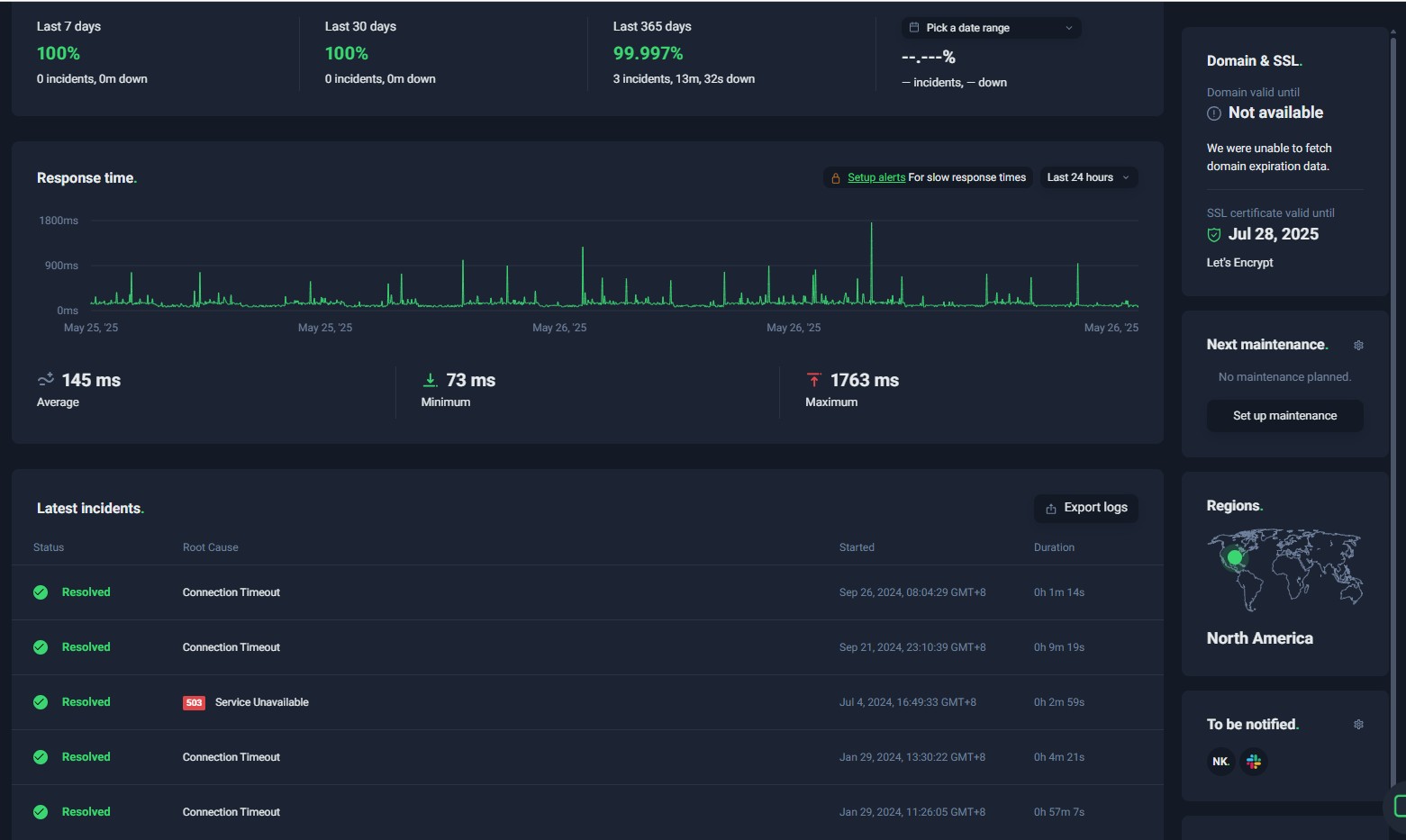
Capabilities provided by tools such as UptimeRobot and Pingdom facilitate effective monitoring of website uptime, thereby assisting in the appraisal of costs incurred during periods of website unavailability.
Strategies to Minimize Website Downtime
Protecting the financial well-being and reputation of your business is paramount, and one essential aspect is minimizing website downtime. You can diminish the risks associated with downtime by employing various tactics such as selecting a dependable hosting provider, engaging in constant monitoring of your website’s uptime, and maintaining frequent backups paired with a solid disaster recovery strategy.
Choosing a Reliable Hosting Provider
Selecting a top-notch web host is key to ensuring dependability and reducing the chances of your website experiencing downtime. Opt for a hosting plan with strong uptime assurances, which are crucial in lessening the likelihood of your site becoming inaccessible. A premier hosting provider stands as a bastion of reliability and security for your digital enterprise.
During periods when consumer demand soars, such as holiday seasons, websites might suffer crashes or encounter errors due to abrupt spikes in visitor numbers. Ecommerce sites face even greater susceptibility to power outages amid high traffic times because they require more resources than their static counterparts.
For mitigating downtime issues, consider utilizing managed WordPress hosting or specialized application/database hosting solutions. Engage with dedicated management services from providers like Resolve that focus on addressing the specific requirements of your site—this strategic move will promote consistent functionality while aiming to keep downtimes at bay.
Implementing Continuous Website Monitoring
It is critical to employ ongoing website monitoring to identify and address problems before they lead to substantial downtime. Employing tools that track the performance of a website in real time ensures that immediate notifications are sent out at the first sign of trouble. Services such as UptimeRobot, provide efficient solutions for keeping an eye on website uptime, which assists in evaluating the financial implications of downtime.
Implementing persistent monitoring instruments can significantly reduce the risks associated with downtime while safeguarding potential earnings.
Regular Backups and Disaster Recovery Planning
Prior to any unforeseen downtime, having consistent backups can accelerate the restoration process. These safeguards are critical for swiftly retrieving files and settings amidst disruptions, thus maintaining the confidence of your users. By utilizing automated backup solutions that store data in protected areas, you create a defensive bulwark against potential information loss and promote expedited recovery.
Following an incident:
- Quick recovery after downtime is made easier by having regular backups.
- Keeping files and system settings safe during outages helps maintain user trust.
- Storing backups securely offsite protects your data.
- Automated backup processes allow fast restoration after problems.
- Using automated tools regularly ensures your website content stays safe.
Web hosting services and WordPress backup plugins make it simple to set up regular backups. For small or mostly static websites, doing backups once a week is usually enough to keep your data safe. It’s a good idea to schedule backups based on how often your site is updated and how many visitors it has.
Developing a solid plan for disaster mitigation ensures business resilience, enabling rapid recovery from periods of operational cessation.
Proactive Measures for Reducing Downtime Risks
Taking proactive steps is crucial to minimize the risks of downtime and maintain your website’s continuous operation. To prepare for unforeseen circumstances that might result in downtime, implementing a disaster recovery plan is imperative. A thorough process and strategic planning form the foundation of an effective incident management program.
There are various proactive actions you can take to help prevent downtime from occurring.
Load Balancing and Traffic Management
Utilizing load balancing is crucial for dispersing incoming traffic over a variety of servers and multiple locations, which diminishes the chance of overwhelming any single server. This approach becomes especially significant when facing high traffic situations such as new product releases or holiday shopping seasons.
Effective management of web traffic ensures that your website remains operational during spikes in visitor numbers, thereby preventing downtime.
Security Features and DDoS Protection
Robust security features, such as a Web Application Firewall (WAF), are essential for defending against cyber threats. Employing a WAF can significantly lessen the effects of DDoS attacks, enhancing service uptime and ensuring consistent availability. It is vital to implement strong protective measures to shield websites from an array of malevolent attacks.
Websites face considerable jeopardy due to DDoS attacks which have the potential to flood servers with traffic, leading to extensive downtime and potentially severe financial repercussions stemming from distributed denial.
Regular Maintenance and Updates
Site proprietors must consistently undertake maintenance to ensure their systems operate efficiently and securely. Essential tasks include:
- Removing redundant files
- Repairing any broken links
- Keeping a vigilant eye on server functionality
- Streamlining databases
By rigorously testing updates prior to integrating them into the active site, compatibility is ascertained, significantly lowering the likelihood of unexpected complications that can arise with version control.
It’s imperative for site owners to institute routine upkeep schedules that cover all aspects of their site’s operations. These routines should encompass regular data backups, diligent server health checks, and timely enhancements to security measures in an effort to circumvent any potential downtime. Scheduled maintenance plays a pivotal role in preserving peak site performance.
Such preventive strategies are integral not just for upholding the website’s efficiency but also for guaranteeing its constant availability online—thus delivering an uninterrupted user experience.
Communicating During Downtime
Maintaining trust and mitigating customer irritation hinges on providing timely information when a website is down. To effectively manage an outage, it’s important to proactively share updates and directly engage with customers’ issues. Leveraging platforms like social media and email can ensure that customers are kept up-to-date regarding the downtime.
It is essential for preserving customer confidence during website interruptions to offer clear communication, which should involve expressing regret and proposing help where possible. There are various effective strategies for conveying messages during periods of downtime.
Setting Up a Downtime Page
Establishing a downtime page during scheduled maintenance ensures that visitors are kept in the loop. Its main function is to convey to visitors that the site will soon return to full operation.
Incorporating contact details for customer queries on the downtime page serves as a form of reassurance, indicating swift attention to the matter at hand and genuine consideration of visitor inquiries.
Utilizing Social Media
Social media managers have the responsibility to utilize social media platforms for delivering prompt updates and assistance when outages occur. By consistently posting updates on these channels, they can help reduce customer irritation. They should make sure that users are kept in the loop with immediate information about the outage and understand that steps are being taken to address and fix the issue.
Transparent Communication
Being open and transparent about the situation and resolution efforts is crucial during downtime. Transparent communication helps maintain customer trust and demonstrates that the company is taking the issue seriously.
Providing regular updates and addressing customer concerns directly can help minimize the negative impact on the company’s reputation.
Final Thoughts
Understanding and minimizing the costs associated with website downtime is essential for protecting your business’s financial health and reputation. By calculating your potential downtime costs, implementing proactive strategies, and maintaining transparent communication during outages, you can significantly reduce the risks and impacts of downtime. Remember, a well-prepared business is better equipped to handle the unexpected and maintain a positive relationship with its customers. Stay vigilant, stay proactive, and keep your website running smoothly.